


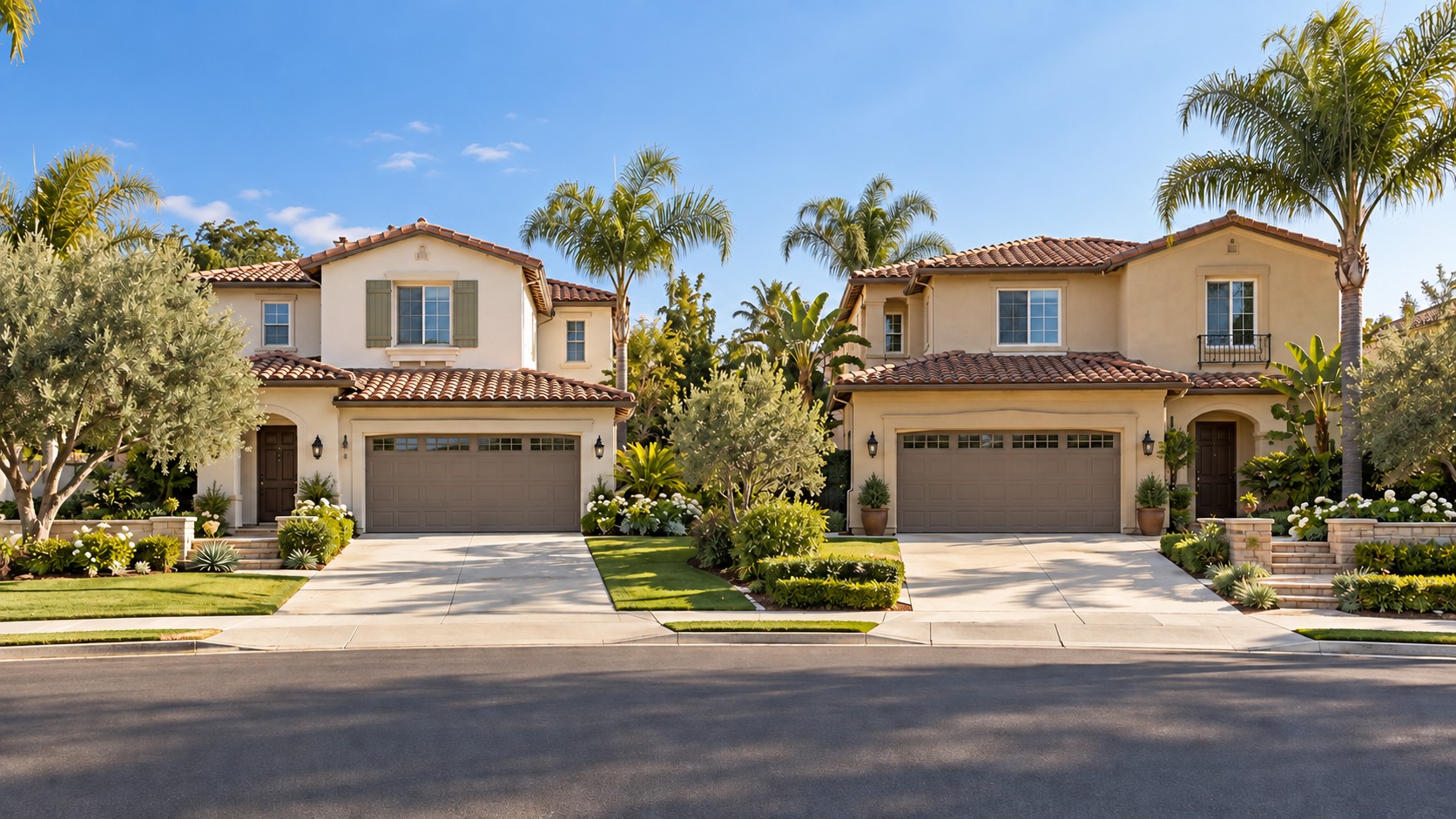
AI-generated illustration; not actual properties or transactions.
One Orange County buyer negotiates $100,000 off the asking price. Another pays $50,000 over asking.
Which buyer got the better deal?
You cannot answer that from the discounts alone. In the hypothetical example below, the buyer who paid over asking actually paid $50,000 less for a comparable home.
Hypothetical comparison—not actual transactions.
Assume two comparable Orange County homes with similar features and condition, equivalent transaction terms, and recent comparable sales that support approximately $1,350,000 for either home.
Buyer A: $100,000 below asking
Seller’s asking price: $1,500,000
Negotiated purchase price: $1,400,000
Discount from asking: $100,000
Price paid above the assumed comparable-sales support: $50,000
Buyer B: $50,000 above asking
Seller’s asking price: $1,300,000
Negotiated purchase price: $1,350,000
Amount above asking: $50,000
Purchase price: consistent with the assumed comparable-sales support
Buyer B pays $50,000 less than Buyer A.
Buyer A negotiated the larger discount. Buyer B paid the lower price for a comparable home. The seller’s starting number changed the story each buyer could tell; it did not change the comparison.
This is about price relative to evidence, not an instruction to bid over asking. The assumed $1,350,000 is not a real appraisal or guaranteed valuation. Actual comparable sales require adjustments and may support a range.
The seller’s starting price is not the measure of a good deal
“We got them down $100,000” tells me where negotiations started and ended. It does not tell me whether the final price makes sense.
A reduction can deserve attention without proving value. I would investigate whether it reflects an ambitious initial price, changing competition, newly understood property issues, or a seller’s changing plans. I would not assume every reduction began with intentional overpricing.
My question is: If we first saw this home at today’s price, without knowing the original asking price, would we still choose it? That removes the discount from the decision and puts the property back in focus.
What I would put in front of you before recommending an offer
The evidence
I would show you which sales belong in the comparison, which deserve less weight, and why. The questions include:
- Are we comparing the same property type and ownership arrangement, rather than grouping every nearby home together?
- Which relevant sales closed recently, and when were their prices negotiated?
- How do size, usable layout, condition, renovations, lot utility, and location differ?
- Did a competing sale include concessions or other terms that affect the comparison?
- What evidence supports an adjustment for a meaningful difference—and where are we still uncertain?
A nearby sale is a starting point, not a verdict. The CFPB’s explanation of home valuations describes how appraisal values generally account for differences between a home and comparable local sales. It also explains why estimates can differ.
Your alternatives
Next, I would put the homes your budget can buy now beside the one you want. Which offers the layout you need? Which requires work you have the time and cash to handle? Does a less expensive option introduce a commute or ownership cost you would regret?
We would identify the trade-offs you would actually accept. An alternative you would never buy should not be the only reason we call another home expensive. An attractive active listing gives us an option to investigate; its asking price is not proof of what it will sell for.
Your walk-away price
Before counteroffers start, we would agree on a decision point grounded in the evidence, your budget, and your priorities. That discussion includes the monthly payment, cash needed to close, reserves, and any work the property may require.
If new information changes the analysis, we can revisit it. Another counteroffer alone is not new evidence of value. You should understand what an additional dollar buys before deciding to spend it.
Why the Orange County details matter
For an Irvine real-estate search, I would ask for the actual HOA documents and dues applicable to the property. Is there more than one association? What do the dues cover? Are there disclosed assessments or planned expenses that need closer review?
I would also check parcel-specific special taxes. Orange County’s Treasurer-Tax Collector guidance on special assessments explains that a bill may include Mello-Roos special taxes or other assessments and identifies the levying district as the source for questions. We should verify the parcel’s charges, not borrow an estimate from another Irvine home.
Condition deserves the same care. What do disclosures and inspections reveal about the roof, systems, moisture issues, or past work? Which questions require a specialist or written estimate before we can judge the cost?
Then we return to competing homes. Is another property available at a similar total budget with fewer compromises? These are questions to investigate for the specific property—not assumptions that every Irvine neighborhood, HOA, or tax bill is the same.
Sellers should run the comparison in reverse
“My neighbor is asking this much” is not enough to establish your asking price. I would examine that home’s differences, the relevant closed sales, and the choices a buyer will see alongside yours.
The question is direct: “Why would a buyer choose your home over the alternatives at this price?”
Your answer should be specific: condition, layout, usable space, location, or terms that matter to the likely buyer. We need evidence for the price and a clear explanation of the home’s strengths.
That comparison is part of my Orange County seller services. I would recommend an asking price we can explain honestly, then review buyer response and changing competition. No pricing strategy guarantees multiple offers or a bidding war.
Three questions worth asking
Is paying over asking always overpaying?
No. Compare the purchase price with relevant sales, the property’s differences, and your alternatives. Paying over asking can be supportable; the asking price alone cannot tell you.
Does a large price reduction mean a home is a good deal?
No. It means the seller lowered the advertised price. Evaluate the new price, condition, ownership costs, and terms before deciding whether it offers value.
How should an Orange County seller choose an asking price?
Use adjusted comparable sales and current competition, then account for the home’s condition and the seller’s priorities. Choose a price with a defensible reason for buyers to consider it.
Let’s look at the property behind the price
Have an Orange County property you’re considering buying or selling? Text me the listing link or property address at 949-572-7098. I’ll review what supports the price, what challenges it, and what needs a closer look before recommending your next move.
James Deokar
JD Signature Real Estate
Irvine CA Realtor | Orange County Real Estate
[email protected]
Contact James Deokar
CA DRE#02200040
Check out this article next